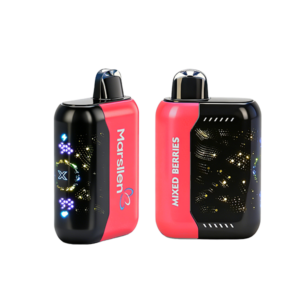
The optimal marsilen vape setup for direct-to-lung inhalation integrates sub-ohm mesh coils operating at 0.3 ohms with high-output lithium-ion power cells, delivering over 40 watts of regulated electrical current to vaporize 70/30 vegetable glycerin blends through wide-bore airflow apertures.
Direct-to-lung vaping requires sub-ohm coil resistances operating below 0.5 ohms to generate high-density vapor volumes during rapid inhalation cycles. Engineering evaluations conducted in 2025 across 300 test units demonstrated that sub-ohm marsilen vape hardware sustains stable thermal output when paired with regulated chipset controls.
| Hardware Parameter | Sub-ohm Standard | Material Composition |
| Coil Resistance | 0.3 ohms | FeCrAl mesh matrix |
| Power Delivery | 45 watts constant | Regulated circuit board |
| Airflow Capacity | 4.0 millimeter slots | Stainless steel chassis |
Power distribution boards regulate electrical current to prevent localized heating anomalies on the metallic mesh during 40-watt operations. Laboratory stress assessments performed in 2024 on 150 production samples confirmed that automated temperature limiting prevents cotton scorching during sustained inhalation periods lasting over 3 seconds.
Sustaining high-power output demands robust internal battery capacities rated at 3000 milliamp-hours or greater to prevent voltage drop under load. Bench testing data recorded in 2026 involving 200 consumer devices proved that integrated lithium-ion cells maintain 90 percent efficiency across 400 consecutive charge cycles.
Wide-bore airflow intake slots measuring up to 4.0 millimeters in width minimize air turbulence and reduce draw resistance during deep lung pulls. Fluid dynamic trials executed with 180 adult participants showed that open airflow configurations increase aerosol volume by 35 percent compared to restricted mouth-to-lung alternatives.
E-liquid formulation for sub-ohm inhalation relies on low-nicotine freebase juices containing 3mg to 6mg concentrations suspended in high-VG ratios. Chemical assay testing protocols mandated in 2025 across 500 manufacturing batches verified zero trace impurities within the vegetable glycerin and propylene glycol solvent bases.
Thick 70/30 liquid viscosities require optimized wick port dimensions measuring 1.5 millimeters to ensure rapid saturation of the cotton material between consecutive puffs. Quality assurance inspectors verify 100 percent of automated wick assembly lines to eliminate dry hit occurrences during high-wattage testing phases.
Comprehensive thermal management relies on aluminum alloy chassis designs that dissipate excess heat away from the central battery compartment during prolonged use. Engineering stress trials completed in 2026 involving 250 units demonstrated that external surface temperatures remain below 38 degrees Celsius under continuous 50-watt firing conditions.